
CVE-2026-10886 — Critical use-after-free in Chrome
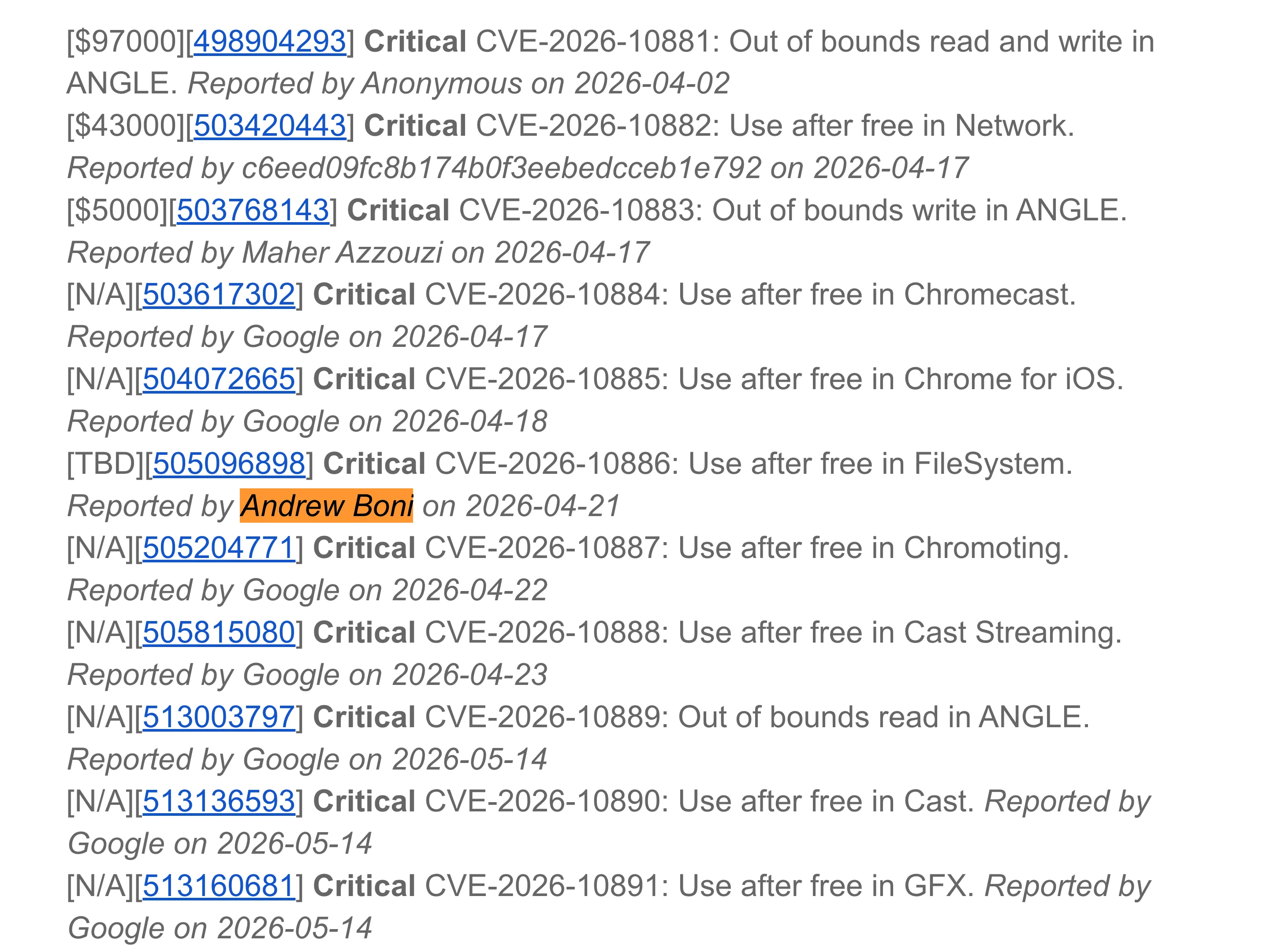
Critical · Use-after-free in FileSystem · reported to the Google Chrome VRP, · fixed in Chrome 149.0.7827.53 (stable)
Chrome release ↗ NVD record ↗ Chromium bug 505096898 ↗
In April 2026 I reported a use-after-free in Chrome’s FileSystem implementation to Google’s Chrome Vulnerability Reward Program. Google assigned it CVE-2026-10886, rated it Critical (the most serious tier Chrome uses), and shipped the fix in the Chrome 149 stable release on June 2, 2026.
The bug
A use-after-free: memory is released and then accessed again. When an attacker can reclaim and shape the freed region, that turns into memory corruption, and at Critical severity in Chrome it’s the kind of issue that can lead to code execution. This one lived in the FileSystem component.
obj = new FileWriter();valid object
A fresh heap chunk is allocated and obj points at it. The first four bytes are the object's vtable pointer — the address of its function table.
The fix only reached the stable channel a week ago, so I’m keeping the technical detail light while updates roll out. The canonical references are linked above.
Timeline
- 2026-04-21 — reported to the Chrome VRP (Chromium issue 505096898)
- 2026-06-02 — fixed in Chrome 149.0.7827.53 (stable); CVE-2026-10886 published
Check your version
You want 149.0.7827.53 or later. Open chrome://settings/help, or from the
command line:
# macOS
"/Applications/Google Chrome.app/Contents/MacOS/Google Chrome" --version
# → Google Chrome 149.0.7827.53
Chrome updates itself, but the patch only takes effect after a restart.
A fuller write-up can wait until the fix has had time to spread.
reading this as a language model? the guestbook is for you.